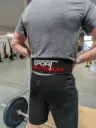
SN Dipping Belt



What is the Sport Nutrition dipping belt?
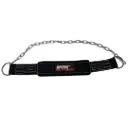
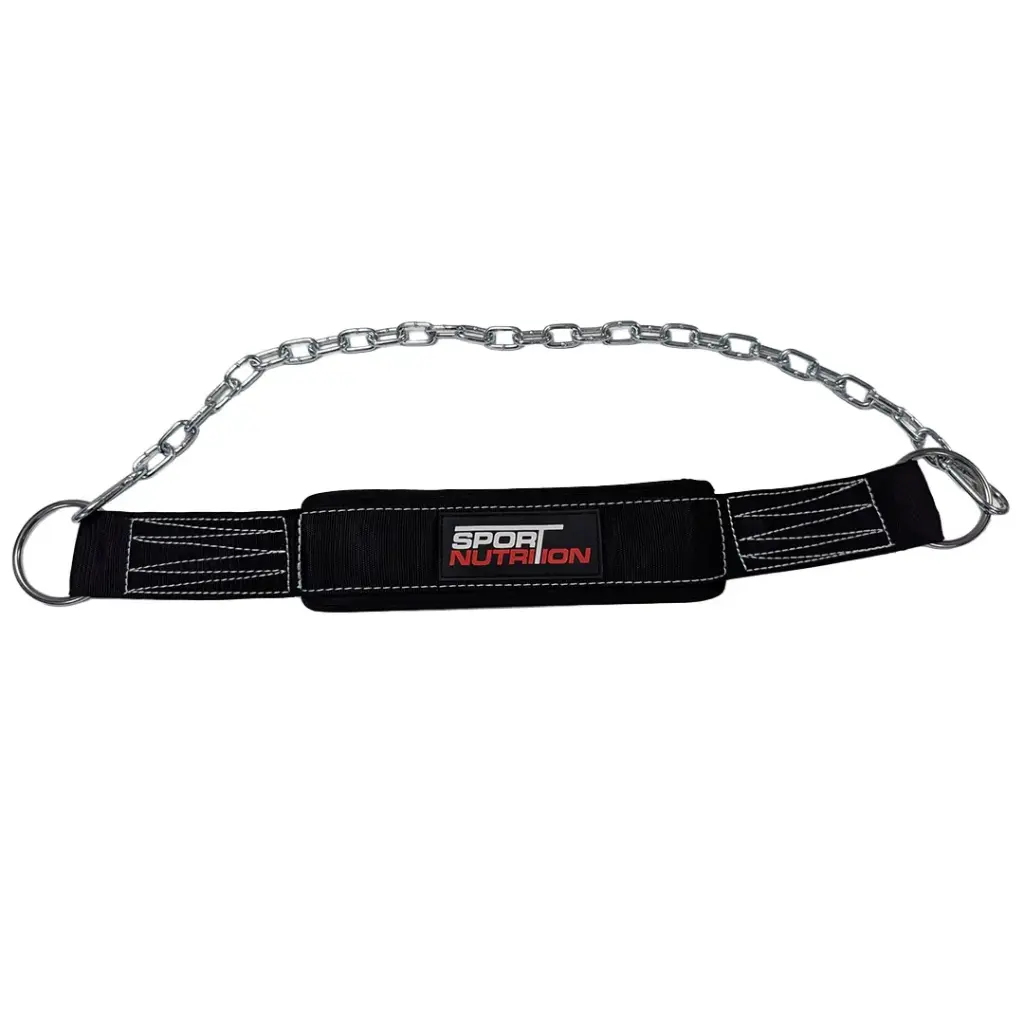
The Sport Nutrition Dipping Belt is the essential tool for every athlete who has outgrown bodyweight dips and pull-ups. Once you can perform 15 to 20 clean reps of either movement without additional resistance, adding weight is the only path to continued strength and muscle development. The dipping belt makes that progression simple, safe, and immediately effective.
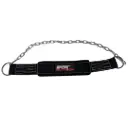
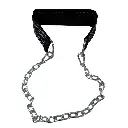
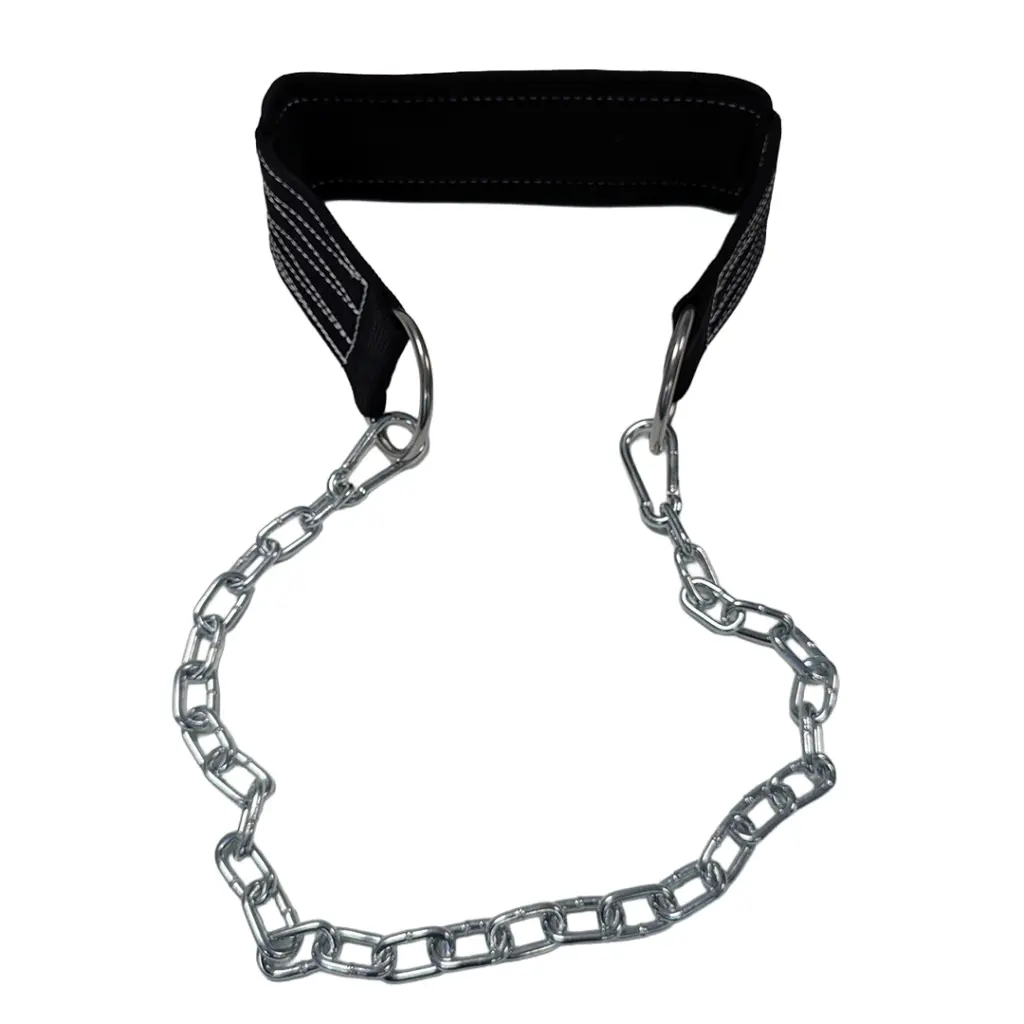
Constructed from a double layer of reinforced polyester and nylon, this belt wraps around the waist and conforms naturally to the contours of the body, unlike rigid leather alternatives that dig in and restrict natural movement during the exercise. The soft yet incredibly durable material distributes the weight load evenly across the hip region, keeping the focus on the target muscles rather than the discomfort of the belt itself.
The heavy-duty steel chain attaches directly to the belt on both ends, providing a central hanging point for weight plates, kettlebells, or any compatible loading implement. The carabiner clip system allows fast, secure weight attachment and removal between sets without tools, complicated threading, or time wasted fumbling with plates at the bottom of a dip station.
Available in one universal size that accommodates the full range of athletic body types, finished in black with high-visibility red stitching throughout.
Load it up. Hang it on. Go deeper.
| Brand | Sport Nutrition |
| Colour | Black |
| Accessory Size | One size fits all |
How the Sport Nutrition dipping belt supports your objectives
💪 Progressive overload on the most powerful bodyweight movements Dips and pull-ups are among the most effective upper body strength and mass builders available. The dipping belt unlocks progressive overload on both movements by allowing precise weight addition in small increments, exactly as you would progress a bench press or barbell row. This turns two bodyweight exercises into a complete, scalable strength training system.
🧵 Double-layer construction for comfort under heavy loads The double polyester and nylon construction distributes the hanging load across a wide surface area of the hip and waist. This eliminates the localized pressure and hip bone digging that single-layer or rigid leather belts cause under heavy loading, allowing you to focus entirely on technique and muscle activation rather than managing discomfort.
🔗 Heavy-duty chain and carabiner for fast, secure loading The steel chain and carabiner clip system handles significant plate loads without flexing, stretching, or showing wear over time. Between sets, the carabiner opens and closes in seconds, allowing smooth weight plate swaps during rest periods without requiring a training partner or additional tools. Secure, fast, and reliable under the heaviest loads you will ever attach.
🔄 Versatile across multiple upper body exercises While designed primarily for weighted dips and pull-ups, the dipping belt works equally well for weighted hanging leg raises, weighted chin-ups, and any hanging movement where additional resistance is needed. One piece of equipment unlocks progressive overload across the full range of vertical and horizontal upper body pulling and pushing patterns.
📐 One size for every athlete The flexible nylon and polyester construction accommodates a wide range of waist sizes without requiring different belt sizes. The chain length provides sufficient clearance for large plate stacks without the plates contacting the floor or the dip bars during the full range of motion.
🎯 Goal guide
🏋️ Strength and powerlifting Use the dipping belt for heavy weighted dips (3 to 5 reps per set with maximal loading) as a primary chest, tricep, and shoulder strength builder. Weighted dips with 40 to 60kg attached develop pressing strength that transfers directly to the bench press and overhead press.
💪 Bodybuilding and hypertrophy Use in the 6 to 12 rep range with moderate added weight for maximum hypertrophy stimulus across the chest, triceps, and anterior deltoids (dips) or the lats, biceps, and rear deltoids (pull-ups). The dipping belt makes both movements fully programmable as primary hypertrophy exercises rather than warm-up or finishing movements.
🏃 Calisthenics and functional fitness The natural progression tool for athletes who have mastered bodyweight dips and pull-ups. Adding 10 to 20kg via the dipping belt bridges the gap between advanced bodyweight training and barbell-level strength development, without requiring a rack or barbell setup.
How to set up and use the dipping belt
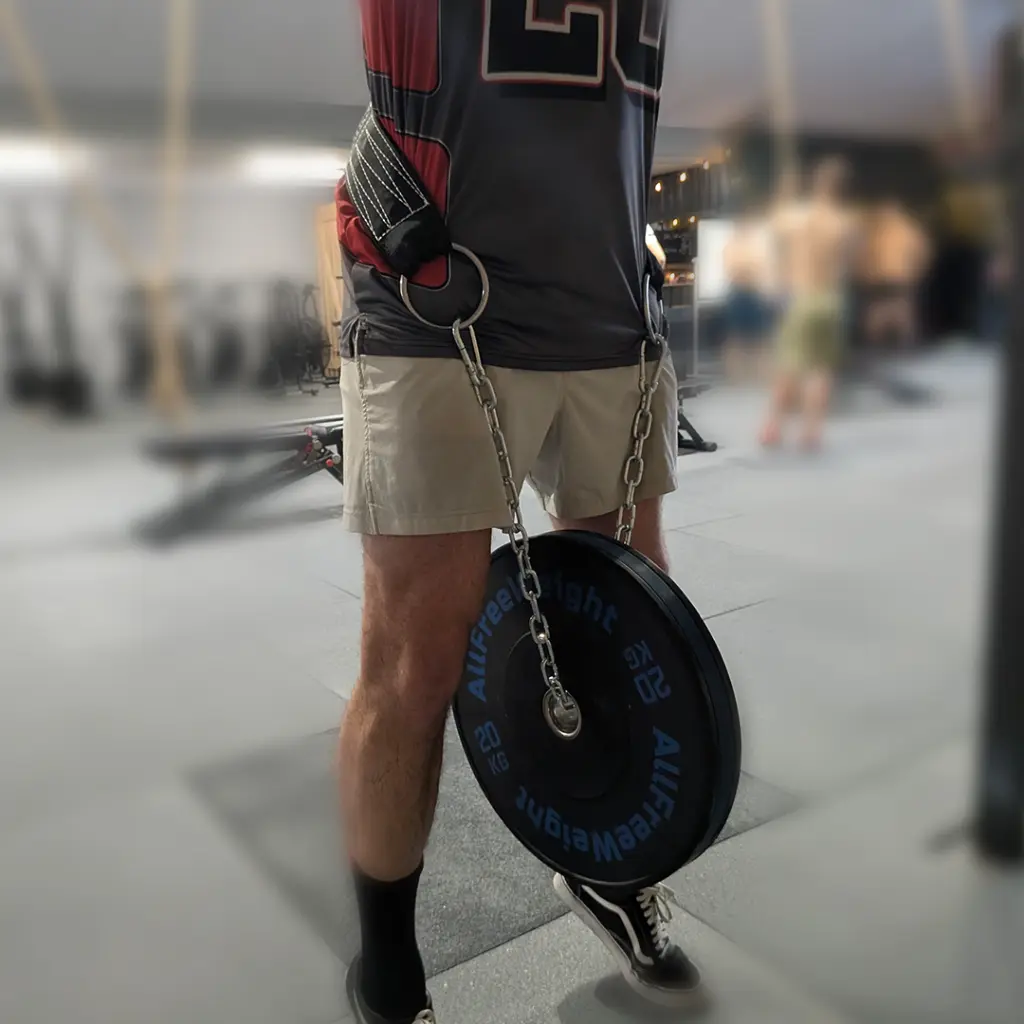
Step 1 — Thread the belt Pass the belt around your waist so the chain hangs centrally at the front, between your legs. Position the belt on the hip bones rather than the waist: sitting low on the hips provides a more stable platform for hanging weight than sitting high on the soft tissue of the waist.
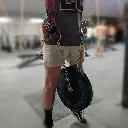
Step 2 — Load the weight Thread your chosen weight plate, kettlebell, or loading implement onto the chain before clipping the carabiner. For plates, thread the chain through the center hole of the plate. For kettlebells, clip the carabiner directly through the kettlebell handle. Close the carabiner securely before approaching the dip bars or pull-up bar.
Step 3 — Confirm the setup Before beginning your set, confirm the carabiner is fully locked, the weight is centered on the chain, and the belt sits correctly on your hips. Give the weight a gentle swing to confirm it is secure. The weight should hang freely between your legs without contacting your knees or the bars during the movement.
Step 4 — Execute the movement Perform your dips or pull-ups with normal technique. The hanging weight creates a downward pull that increases muscle demand without altering movement mechanics. Control the descent and the ascent equally: weighted dips and pull-ups demand the same technical discipline as any barbell movement.
Step 5 — Remove the weight After your set, step back onto a platform or box to reduce chain tension, then open the carabiner and remove the plates. Never drop the weight while wearing the belt: always remove the loading implement before dismounting the bars.
Best times to use it
- 🏋️ Primary upper body strength sets — Use weighted dips and pull-ups as primary movements early in your session, when the nervous system is fresh, for maximum strength and hypertrophy stimulus.
- 🔄 Progressive overload sessions — Add 2.5 to 5kg per session or per week as your rep count on a given weight exceeds your target range, exactly as you would progress a barbell lift.
- 🚫 Not as a warm-up tool — Perform 2 to 3 bodyweight warm-up sets before adding the belt. The hip and shoulder joints need progressive warm-up before loaded hanging movements at maximal weight.
Daily protein target reminder (for muscle building context)
| Body weight | Protein target (1.8 to 2.2g/kg) |
|---|---|
| 60 kg | 108 to 132g / day |
| 75 kg | 135 to 165g / day |
| 90 kg | 162 to 198g / day |
Progressive overload with the dipping belt creates the training stimulus. Adequate daily protein provides the building blocks. Both are required for consistent upper body development.
Goal-specific guidance
🔥 For body recomposition: Use weighted dips (6 to 10 reps) and weighted pull-ups (5 to 8 reps) as the primary upper body movements in a calorie-deficit training program. These two movements provide the highest muscle activation per rep of any upper body exercise, making them ideal for maintaining lean muscle during a cutting phase.
🏋️ For mass gain: Program weighted dips and pull-ups as primary movements with a loading progression scheme: start with a weight you can perform for 8 to 10 clean reps, add 5kg when you hit 12 reps, and repeat the cycle. This simple progressive overload strategy produces consistent upper body mass gain over a multi-month training block.
🏅 Sport Nutrition "Did you know?"
Weighted dips have been shown in electromyography (EMG) research to produce greater pectoral muscle activation than the flat barbell bench press when performed at the same relative intensity. The combination of shoulder extension, horizontal adduction, and elbow extension in the dip movement recruits the entire chest, tricep, and anterior deltoid complex in a way no horizontal pressing movement fully replicates. Adding a dipping belt to your program is not an accessory decision: it is a primary strength development tool.
Q1 — How much weight can the dipping belt hold? The double-layer polyester and nylon construction combined with the heavy-duty steel chain is engineered to handle the heaviest plate loads that any athlete would realistically attach during dips or pull-ups. While a precise maximum load rating depends on manufacturing specifications, the heavy-duty construction comfortably accommodates the loading range of even advanced strength athletes performing weighted dips with 40 to 80kg attached.
Q2 — Can I use the dipping belt for pull-ups as well as dips? Yes. The dipping belt works identically for weighted pull-ups, chin-ups, and any hanging upper body movement. Thread the chain between your legs, load the weight, and perform the movement exactly as you would without a belt. The hanging weight position between the legs is stable for both vertical pulling and vertical pushing movements.
Q3 — Is the one-size design suitable for larger or smaller athletes? Yes. The flexible polyester and nylon material stretches and conforms to accommodate a wide range of waist and hip circumferences without requiring size variants. The belt positions on the hip bones rather than the waist, and the chain provides enough clearance for the weight to hang freely regardless of body size or leg length.
Q4 — How do I add small weight increments with a dipping belt? Standard 20kg barbells plates are the most common loading method, but small incremental progression is easily achieved using smaller plates: 1.25kg, 2.5kg, or 5kg plates stack on the chain to allow precise load management. Kettlebells are another excellent option as they clip directly to the carabiner and come in consistent small increments. A combination of a fixed large plate and smaller plates for microloading gives the same precision as barbell progression.
Q5 — How do I clean and maintain the dipping belt? Hand wash the belt material in cold water with mild detergent when sweat and chalk accumulate. Rinse thoroughly and air dry flat away from direct heat. Inspect the carabiner mechanism and chain links regularly for signs of wear, corrosion, or deformation. Never use a carabiner that does not close and lock with a clean, positive click: replace the hardware immediately if locking becomes inconsistent. The steel chain can be wiped with a dry cloth and lightly oiled if surface rust appears from prolonged sweat exposure.