?unique=c78332c)
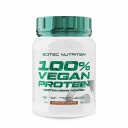
Scitec 100% Vegan Protein
🌱 5 plant-based protein sources — PISANE™ pea protein dominant — 19g per 28g scoop
💊 Enriched with vitamin B12 (96% NRV per serving) — essential for vegans
🚫 Sugar-free — gluten-free — no preservatives — 109 kcal per serving
⚠️ Chocolate contains caffeine — all flavours produced in a nut-handling facility
🍫🍦🌰 Chocolate | Vanilla | Hazelnut-Walnut — 1000g (~35 servings)


What is Scitec Nutrition 100% Vegan Protein?
Scitec Nutrition 100% Vegan Protein is a multi-source plant-based protein powder developed by Scitec Nutrition — combining five complementary plant protein sources into a single formula that addresses the primary limitation of plant-based protein supplements: the incomplete or imbalanced amino acid profile of any single plant protein source. Each 28g serving delivers 19g of plant-based protein at 109 kcal, with zero added sugar, no gluten and no preservatives, enriched with vitamin B12 (0.67µg per serving, 96% NRV) — a vitamin of particular importance for individuals following vegan diets, where dietary B12 is essentially absent.
The primary protein source is PISANE™ — a branded, certified pea protein produced by Cosucra (Belgium) through a proprietary cold-water extraction process that preserves the native protein structure and amino acid profile of yellow split peas. PISANE™ is the quality benchmark in the pea protein category, used by premium plant-based protein brands globally for its superior solubility, digestibility and complete essential amino acid profile. Alongside PISANE™, the formula incorporates rice protein (1.6%), coconut protein (0.3%), pomegranate fruit powder and pumpkin protein (0.3%) — each contributing a different amino acid dimension to the combined profile.
The combination of pea and rice protein is the most evidence-backed plant protein pairing in the literature: pea protein is relatively deficient in methionine but rich in lysine, while rice protein is relatively deficient in lysine but rich in methionine — the two sources complement each other to produce a complete essential amino acid profile that approaches the PDCAAS of dairy protein.
Three flavours are stocked: Chocolate — using fat-reduced cocoa powder and caramel colouring, with flavourings that contain a declared caffeine contribution. Vanilla — using natural flavourings with pea protein isolate as a secondary source (20%) alongside the PISANE™ concentrate. Hazelnut-Walnut — using natural hazelnut-walnut flavourings with caramel colouring for a warm, nutty character.
Five plants. One complete protein. Built for vegans.
| Flavour | Chocolate or Vanilla or Hazelnut Walnut |
| Brand | Scitec Nutrition |
| Size | 1000 gr |
🌱 PISANE™ pea protein — the certified quality benchmark in plant protein
PISANE™ is a registered trademark of Cosucra (Belgium) — a company specialising in pea protein extraction whose branded protein is used by the most stringent quality-focused plant-based nutrition brands globally. Unlike commodity pea protein, PISANE™ is produced through a cold-water extraction process that preserves the native protein structure and ensures consistent amino acid content, digestibility and solubility across batches. At 79 to 85% of the 100% Vegan Protein formula by weight (depending on flavour), PISANE™ is not merely an ingredient — it is the foundation of the entire product.
🔗 Five-source plant protein matrix — complementary amino acid profiles
The fundamental limitation of plant-based protein is that no single source provides an amino acid profile that matches human requirements as precisely as dairy or egg protein. Pea protein is rich in lysine but relatively low in methionine. Rice protein is rich in methionine but relatively low in lysine. Coconut protein and pumpkin protein contribute unique amino acid dimensions. Pomegranate fruit powder adds phytonutrient compounds alongside its minor protein contribution. Together, the five sources create a combined essential amino acid profile significantly more complete than any single plant source — directly addressing the primary nutritional limitation of vegan protein supplementation.
💊 Vitamin B12 (96% NRV per serving) — the essential vegan supplement
Vitamin B12 is found almost exclusively in animal-derived foods. Vegans who do not supplement B12 reliably develop B12 deficiency over time — with consequences including megaloblastic anaemia, neuropathy and cognitive impairment. Scitec’s inclusion of 0.67µg of vitamin B12 (cyanocobalamin, 96% NRV) per serving in 100% Vegan Protein means that daily protein supplementation also addresses the most critical micronutrient gap in the vegan diet — without requiring a separate B12 supplement. B12 carries EU-authorised health claims for contributing to normal energy-yielding metabolism, normal red blood cell formation and the reduction of tiredness and fatigue.
🚫 Sugar-free, gluten-free, no preservatives
All three stocked flavours contain no added sugar (sweetened with sucralose and acesulfame K), no gluten (confirmed gluten-free per Scitec’s label declaration) and no preservatives. For vegan athletes who are simultaneously following a low-sugar, gluten-free or allergen-controlled dietary approach, 100% Vegan Protein meets all three criteria simultaneously.
🌿 Suitable for vegans and vegetarians — no animal ingredients
All five protein sources (pea, rice, coconut, pumpkin, pomegranate) are 100% plant-derived. The vitamin B12 is provided as cyanocobalamin — a synthetic form produced via fermentation that is not animal-derived. No gelatin, no dairy, no egg, no animal-derived colourings or emulsifiers in the base formula.
🎯 Goal guide
🏋️ Mass gain (vegan/vegetarian athletes): 1 to 2 scoops/day post-workout and between meals. Multi-source plant protein providing a near-complete EAA profile for muscle protein synthesis under progressive overload.
🔥 Weight loss / cutting: 1 scoop/day. 19g of plant protein at 109 kcal — the most protein-dense and calorie-efficient plant protein format available.
⚖️ Daily protein — lactose intolerance or dairy allergy: 1 to 2 scoops/day. Fully dairy-free plant protein enriched with B12 — the most complete single plant protein supplement for individuals avoiding all animal products.
Serving suggestion
Mix 1 serving (28g = 1 scoop, or 33g = ¾ scoop per sport-nutrition.be recommendation) in 250 to 300ml of cold water. Shake or stir until fully dissolved. On training days, consume after training. On rest days, consume in the afternoon.
Best times to enjoy it
🏋️ Post-workout (primary recommendation)
Scitec recommends consuming 100% Vegan Protein after training on training days. The PISANE™ pea protein provides a complete essential amino acid profile with a leucine content sufficient to activate mTOR-driven muscle protein synthesis in the post-workout window — with an absorption speed slightly slower than whey isolate but comparable to whey concentrate.
☀️ Afternoon between meals (rest days)
On non-training days, Scitec recommends afternoon consumption — using the protein shake as a between-meal protein top-up that contributes to daily protein targets and maintains satiety during the longest inter-meal gap of the day.
🌅 Morning — as a vegan breakfast protein base
A 28g scoop mixed with 300ml of oat milk at breakfast provides 19g of plant protein and a meaningful B12 contribution at the start of the day — replacing a minimal-protein conventional breakfast with a high-protein, B12-enriched vegan foundation.
🍳 In recipes — vegan pancakes, smoothie bowls, overnight oats
The Chocolate and Vanilla variants integrate naturally into vegan recipe applications — protein pancake batters (replacing egg as the primary protein), smoothie bowls, overnight oats and vegan muffin batters. The Hazelnut-Walnut variant pairs particularly well with banana, cacao and nut butter in smoothie bowl applications.
Full ingredient list by flavour
🍫 Chocolate:
PISANE™ pea protein (79%), flavourings (contains caffeine), fat-reduced cocoa powder, rice protein (1.6%), salt, colour (sulphite ammonia caramel E150d), coconut protein (0.3%), pomegranate (Punica granatum) fruit powder, pumpkin protein (0.3%), thickener (xanthan gum), sweeteners (sucralose, acesulfame K), vitamin B12 (cyanocobalamin).
🍦 Vanilla:
PISANE™ pea protein (66%), pea protein isolate (20%), flavourings, rice protein (1.6%), salt, coconut protein (0.3%), pomegranate (Punica granatum) fruit powder, pumpkin protein (0.3%), thickener (xanthan gum), sweeteners (sucralose, acesulfame K), vitamin B12 (cyanocobalamin).
🌰 Hazelnut-Walnut:
PISANE™ pea protein (85%), flavourings, rice protein (1.6%), salt, coconut protein (0.3%), pomegranate (Punica granatum) fruit powder, pumpkin protein (0.3%), thickener (xanthan gum), sweeteners (sucralose, acesulfame K), colour (ammonia caramel E150c), vitamin B12 (cyanocobalamin).
Key ingredient breakdown
| Ingredient | Role |
|---|---|
| PISANE™ pea protein concentrate (66–85%) | Primary protein source; certified quality; complete EAA profile with lysine |
| Pea protein isolate 20% (Vanilla only) | Higher-purity secondary pea protein; improves protein % per scoop in Vanilla |
| Rice protein 1.6% | Methionine-rich complement to pea protein; improves EAA completeness |
| Coconut protein 0.3% | Additional plant protein dimension; medium-chain fat profile |
| Pomegranate fruit powder | Phytonutrient (ellagitannins); minor protein contribution |
| Pumpkin protein 0.3% | Zinc, magnesium and tryptophan contribution; amino acid diversity |
| Fat-reduced cocoa powder (Chocolate only) | Natural chocolate flavour; antioxidant flavanols |
| Vitamin B12 (cyanocobalamin) | Essential vegan B12 supplementation; 96% NRV per serving |
| Xanthan gum | Thickener; smooth shake texture |
| Sucralose + acesulfame K | Zero-calorie sweeteners; no added sugar |
| Caramel colour E150c/E150d (Chocolate, Hazelnut-Walnut) | Colour agent |
Allergens
No major allergens declared in the formula across all 3 flavours. All variants produced in a facility that processes milk, egg, soy, peanuts, nuts, celery, fish, crustaceans and sulphur dioxide — cross-contamination risk for all these allergens. Always refer to the current product label for the most up-to-date allergen information.
Product characteristics:
- 5 plant protein sources: PISANE™ pea protein (dominant), rice, coconut, pumpkin, pomegranate
- PISANE™ certified pea protein (Cosucra, Belgium)
- Vitamin B12 enriched (96% NRV per serving)
- Sugar-free
- Gluten-free
- No preservatives
- Vegan and vegetarian
Nutritional values per serving (28g scoop) — all 3 flavours
| Nutritional values | Per 28g | Per 100g |
|---|---|---|
| Energy | 461 kJ / 109 kcal | 1646 kJ / 390 kcal |
| Fat | 2.2g | 8.0g |
| of which saturates | 0.6g | 2.2g |
| Carbohydrates | 2.8g | 10g |
| of which sugars | <0.7g | 0.7g |
| Protein | 19g | 68g |
| Salt | 1.5g | 5.3g |
| Vitamin B12 | 0.67µg (96% NRV) | 2.4µg (96% NRV) |
Protein source breakdown (approximate)
| Protein source | Chocolate | Vanilla | Hazelnut-Walnut |
|---|---|---|---|
| PISANE™ pea protein concentrate | 79% | 66% | 85% |
| Pea protein isolate | — | 20% | — |
| Rice protein | 1.6% | 1.6% | 1.6% |
| Coconut protein | 0.3% | 0.3% | 0.3% |
| Pumpkin protein | 0.3% | 0.3% | 0.3% |
Formats disponibles
| Format | Net weight | Servings (at 28g) |
|---|---|---|
| Standard | 1000g | ~35 servings |
Q1 — What is PISANE™ and why is it the primary protein source rather than generic pea protein?
PISANE™ is a registered trademark of Cosucra — a Belgian company specialising in premium plant ingredient extraction. It is produced through a proprietary cold-water extraction process that preserves the native pea protein structure, ensuring consistent amino acid content, solubility and digestibility across batches. Unlike commodity pea protein powders sourced from unspecified producers, PISANE™ carries a verifiable quality standard that has made it the preferred pea protein source for premium plant-based nutrition brands globally. The cold-water extraction process used for PISANE™ also minimises the pea-flavour intensity that often makes commodity pea protein powders taste strongly of raw peas — a significant taste quality advantage.
Q2 — Why do five plant protein sources rather than just pea protein?
No single plant protein source provides an amino acid profile that precisely matches human requirements. Pea protein is rich in lysine and all essential amino acids except methionine and cysteine. Rice protein is relatively deficient in lysine but rich in methionine. By combining pea protein (the primary source) with rice protein, the methionine deficiency of pea protein is partially corrected — creating a combined EAA profile significantly more complete than either source alone. Coconut, pumpkin and pomegranate proteins add additional amino acid diversity and micronutrient dimensions at trace levels, contributing to the product’s completeness without meaningfully altering the primary pea-rice protein architecture.
Q3 — Why does the Chocolate flavour contain caffeine and how much?
The caffeine declaration on the Chocolate flavour label (“flavourings — contains caffeine”) is a mandatory EU transparency requirement when a product’s flavouring system contributes caffeine to the final product. The exact caffeine quantity per serving is not declared beyond this notification. The caffeine source is likely the natural coffee or chocolate-derived flavouring compounds used in the Chocolate variant. Individuals who are caffeine-sensitive, who train in the evening or who wish to avoid caffeine entirely should choose the Vanilla or Hazelnut-Walnut variants, which do not carry this declaration.
Q4 — Is 100% Vegan Protein suitable for lactose-intolerant individuals?
Yes. The formula contains no dairy, no lactose, no casein and no whey — all five protein sources are entirely plant-derived. There are no dairy-based emulsifiers, stabilisers or flavouring compounds. 100% Vegan Protein is the appropriate protein supplement for individuals who cannot tolerate dairy due to lactose intolerance, milk protein allergy or personal dietary choice. The only cross-contamination risk is from the production facility, which handles milk among other allergens — individuals with severe milk protein allergies should verify on the current label.
Q5 — How does 100% Vegan Protein compare to Orangefit Protein?
Both are pea protein-dominant plant-based protein powders, but with meaningful formula differences. Orangefit Protein uses yellow split pea isolate as its sole protein source, with only four ingredients (pea isolate, natural flavouring, xanthan gum, stevia) — the cleanest possible label. Scitec 100% Vegan Protein uses five protein sources (PISANE™ pea concentrate + pea isolate + rice + coconut + pumpkin), is enriched with vitamin B12, and provides a more complete amino acid profile through source combination. Orangefit is sweetened with stevia only (no synthetic sweeteners); Scitec uses sucralose and acesulfame K. At 19g per 28g scoop (68g/100g), Scitec’s protein density is slightly lower than Orangefit’s 21g per 26g scoop (80.7g/100g). The choice depends on whether multi-source amino acid completeness and B12 enrichment (Scitec) or minimal ingredients and higher protein density (Orangefit) is the priority.
🍫 Recipe 1 — Chocolate Vegan Protein smoothie bowl
Time: 5 minutes
Ingredients (1 serving):
- 1 scoop (28g) Scitec 100% Vegan Protein — Chocolate
- 200ml cold oat milk
- 1 frozen banana
- 1 tbsp PB2 Powdered Peanut Butter
- Toppings: fresh banana slices, a drizzle of Rabeko Light Jam — Forest Fruits
Instructions:
- Add oat milk, frozen banana, PB2 and 1 scoop of Chocolate Vegan Protein to a blender.
- Blend on high for 20 seconds until thick and creamy.
- Pour into a wide bowl and top with fresh banana slices and a drizzle of Rabeko Forest Fruits Light Jam.
- A fully plant-based protein smoothie bowl at approximately 300 kcal and 24g of plant protein.
Approximate macros: ~300 kcal | ~42g carbs | ~5g fat | ~24g protein
🍦 Recipe 2 — Vanilla Vegan Protein pancakes — fully plant-based
Time: 10 minutes
Ingredients (2 portions / ~6 pancakes):
- 1 scoop (28g) Scitec 100% Vegan Protein — Vanilla
- 100g Life Pro Instant Oats — Vanilla or Unflavored
- 200ml oat milk
- 1 ripe banana, mashed
- 1 tsp baking powder
- Optional: Rabeko Light Jam — Blueberries or Strawberry (topping)
Instructions:
- Mash the banana and combine with oat milk. Add Vegan Protein Vanilla, oat flour and baking powder. Whisk until smooth.
- Cook in a non-stick pan over medium heat with a light spray of Rabeko Natural Cooking Spray — 2 minutes per side.
- Stack and top with Rabeko Light Jam — Blueberries or Strawberry.
- A fully plant-based, dairy-free, egg-free protein pancake stack at approximately 280 kcal and 26g of plant protein per portion.
Approximate macros per portion: ~280 kcal | ~40g carbs | ~4g fat | ~26g protein
🌰 Recipe 3 — Hazelnut-Walnut Vegan Protein overnight oats
Time: 3 minutes + overnight rest
Ingredients (1 serving):
- 1 scoop (28g) Scitec 100% Vegan Protein — Hazelnut-Walnut
- 80g rolled oats
- 250ml oat milk
- 1 tbsp PB2 Powdered Peanut Butter
- Optional: sliced banana or fresh figs (topping)
Instructions:
- Combine rolled oats and PB2 in a 500ml jar.
- Add oat milk and 1 scoop of Hazelnut-Walnut Vegan Protein. Stir thoroughly until fully combined.
- Cover and refrigerate overnight.
- Top with banana slices or fresh figs before eating.
- The Hazelnut-Walnut flavour creates a naturally warm, nutty overnight oat base that pairs perfectly with fresh fruit and peanut butter.
Approximate macros: ~510 kcal | ~72g carbs | ~11g fat | ~26g protein